
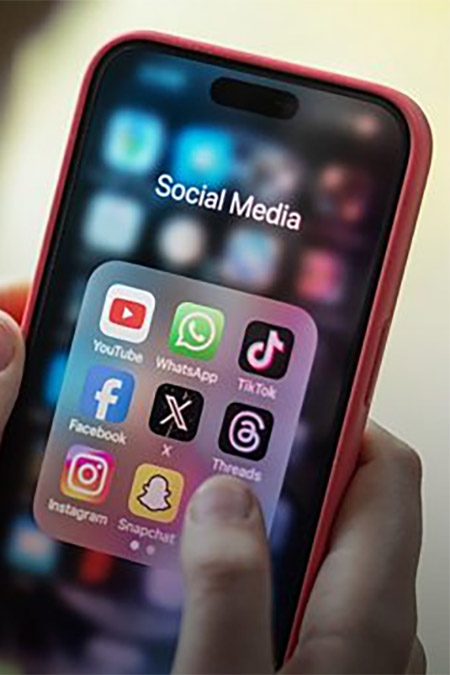
ocial media bans, digital curfews and time limits on apps are to be trialled in the homes of hundreds of UK teenagers.
The test, led by the UK government, will see 300 teens have their social apps disabled entirely, blocked overnight or capped to one hour's use - with some also seeing no such changes at all - in order to compare their experiences.
It will run alongside the government's consultation asking whether the UK should follow in Australia's footsteps by making it illegal for under-16s to have access to many social media sites.
Technology Secretary Liz Kendall said it was about "testing different options in the real world".
"These pilots will give us the evidence we need to take the next steps, informed by the experiences of families themselves," she added.
Children and parents involved in the trial will be interviewed before and after the pilot scheme to assess its impact.
Meanwhile, the government's consultation about banning social media for children will continue to run until 26 May.
Read the full article on BBC.

The relationship between social media use and life satisfaction changes across adolescent development. Our analyses of two UK datasets comprising 84,011 participants (10–80 years old) find that the cross-sectional relationship between self-reported estimates of social media use and life satisfaction ratings is most negative in younger adolescents.
Read More
Austria has announced plans to ban social media for children aged under 14, becoming the latest country to consider introducing restrictions for children online. Andreas Babler says that it is the responsibility of politicians to protect children and argued that the issue should be treated no different to alcohol or tobacco: "There must be clear rules in the digital world too."
Read MoreWe greatly appreciate your feedback on this website and would like to know what information you found useful and what services you would like to see next. Please take a couple of minutes to let us know.
survey


