

he relationship between social media use and life satisfaction changes across adolescent development. Our analyses of two UK datasets comprising 84,011 participants (10–80 yearsold) find that the cross-sectional relationship between self-reported estimates of social media use and life satisfaction ratings is most negative in younger adolescents. Furthermore, sex differences in this relationship are only present during this time. Longitudinal analyses of 17,409 participants (10–21 years old) suggest distinct developmental windows of sensitivity to social media in adolescence, when higher estimated social media use predicts a decrease in life satisfaction ratings one year later (and vice-vers a: lower estimated social media use predicts an increase in life satisfaction ratings). These windows occur at different ages formales (14–15 and 19 years old) and females (11–13 and 19 years old). Decreases in life satisfaction ratings also predicted subsequent increases in estimated social media use,however, these were not associated with age or sex.
Read the full article on Nature Communications.

The aim of this study was to identify problematic gaming behavior among Finnish adolescents and young adults, and evaluate its connection to a variety of psychological, social, and physical health symptoms. This research emphasized that problematic gaming behavior had a strong negative correlation to a variety of subjective health outcomes.
Read More
Gaming platforms and social media pose similar risks for children: excessive time spent online, and potential exposure to predators, harmful content or bullying. Dr Daniela Vecchio wonders why gaming platforms have not been included in Australia's "world-first" social media ban for under-16s.
Read More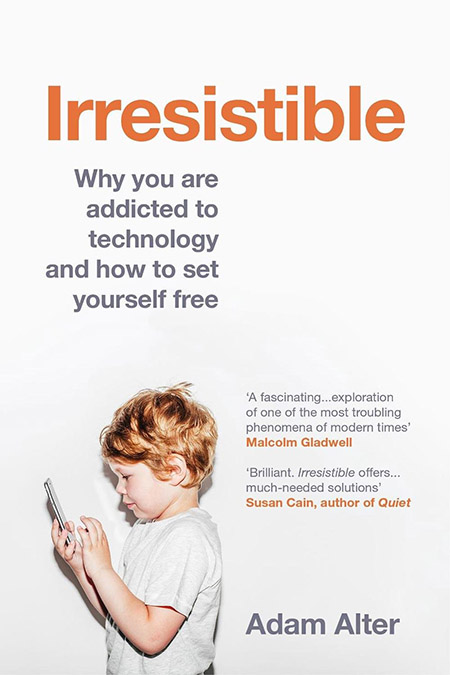
Psychologist Adam Alter provides insight into why we have addiction to technology, explains the science behind why we can't seem to stop such behaviour and offers practical advice for using technology differently, in order to lead a happier life, and to set yourself free.
Read MoreWe greatly appreciate your feedback on this website and would like to know what information you found useful and what services you would like to see next. Please take a couple of minutes to let us know.
survey


